
In industrial manufacturing, precise filtration is essential for protecting equipment, maintaining product purity, and ensuring regulatory compliance. Cartridge filters play a central role across industries including pharmaceuticals, semiconductor manufacturing, food and beverage production, and automotive plants. Working with a trusted cartridge filter manufacturer ensures that particle retention, micron ratings, and material compatibility are all validated for the process at hand.
This article breaks down how cartridge filters work, the main types available, and what to look for when selecting the right solution.
Key Takeaways
- A cartridge filter is a replaceable element used in industrial systems to remove contaminants, particulates, and microorganisms from fluids or gases.
- Choosing the right cartridge filter involves considering micron rating, chemical compatibility, flow rate, and regulatory standards.
- Cartridge filters improve industrial process safety, product purity, and equipment protection across industries like pharmaceuticals, food processing, and semiconductor manufacturing.
- Types of cartridge filters—such as pleated membrane, melt-blown, and high flow filters—are selected based on specific application and contaminant removal needs.
- Regular cartridge filter maintenance, including timely replacement and integrity testing, ensures ongoing process reliability and compliance.
Understanding Cartridge Filters: Definition and Components
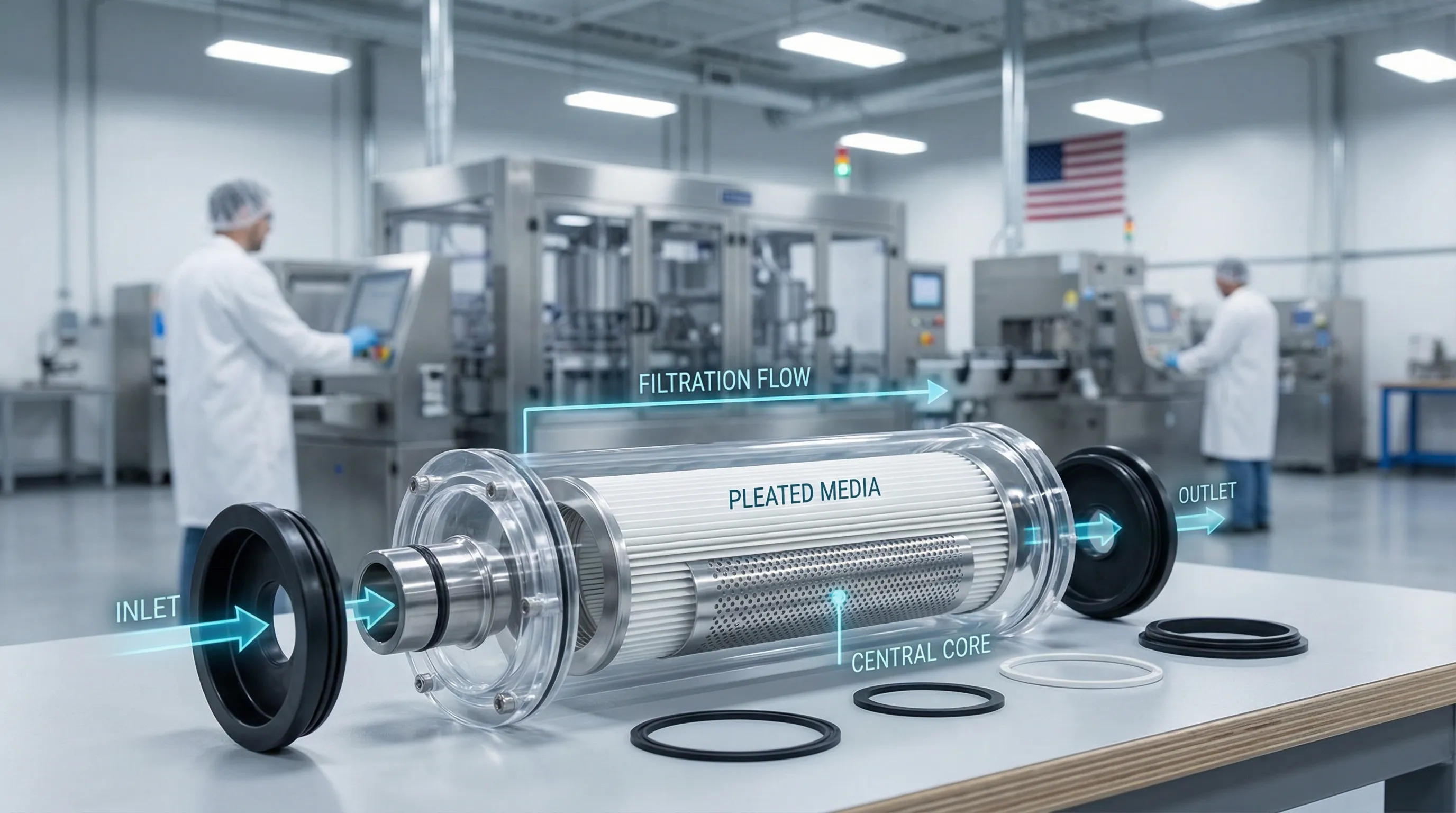
A cartridge filter is a replaceable filter element housed within a filtration system, designed to remove contaminants, particulates, and in some cases microorganisms from fluids or gases. The main components are the filter cartridge (also called the element), the supporting housing, and flow distribution hardware.
Key Components:
- Filter Media: The heart of the cartridge, typically made from pleated membranes, melt-blown fibers, or woven materials. The choice of media (such as polypropylene or PTFE) determines the micron rating and chemical compatibility.
- Core: Provides structural support for the filter media to withstand pressure differentials.
- End Caps and Gaskets: Seal the cartridge within the housing to prevent bypass of unfiltered material.
- Housing: The external shell holding the cartridge, engineered for easy replacement and maintenance.
Leading manufacturers like Pullner Filter use automated production lines and advanced cleanroom technology to create consistent, high-quality cartridge filters. Their Songjiang factory operates over 20 production lines in ISO-class environments to ensure product integrity and sterility, suitable for sensitive industries.
How Cartridge Filters Function in Industrial Applications
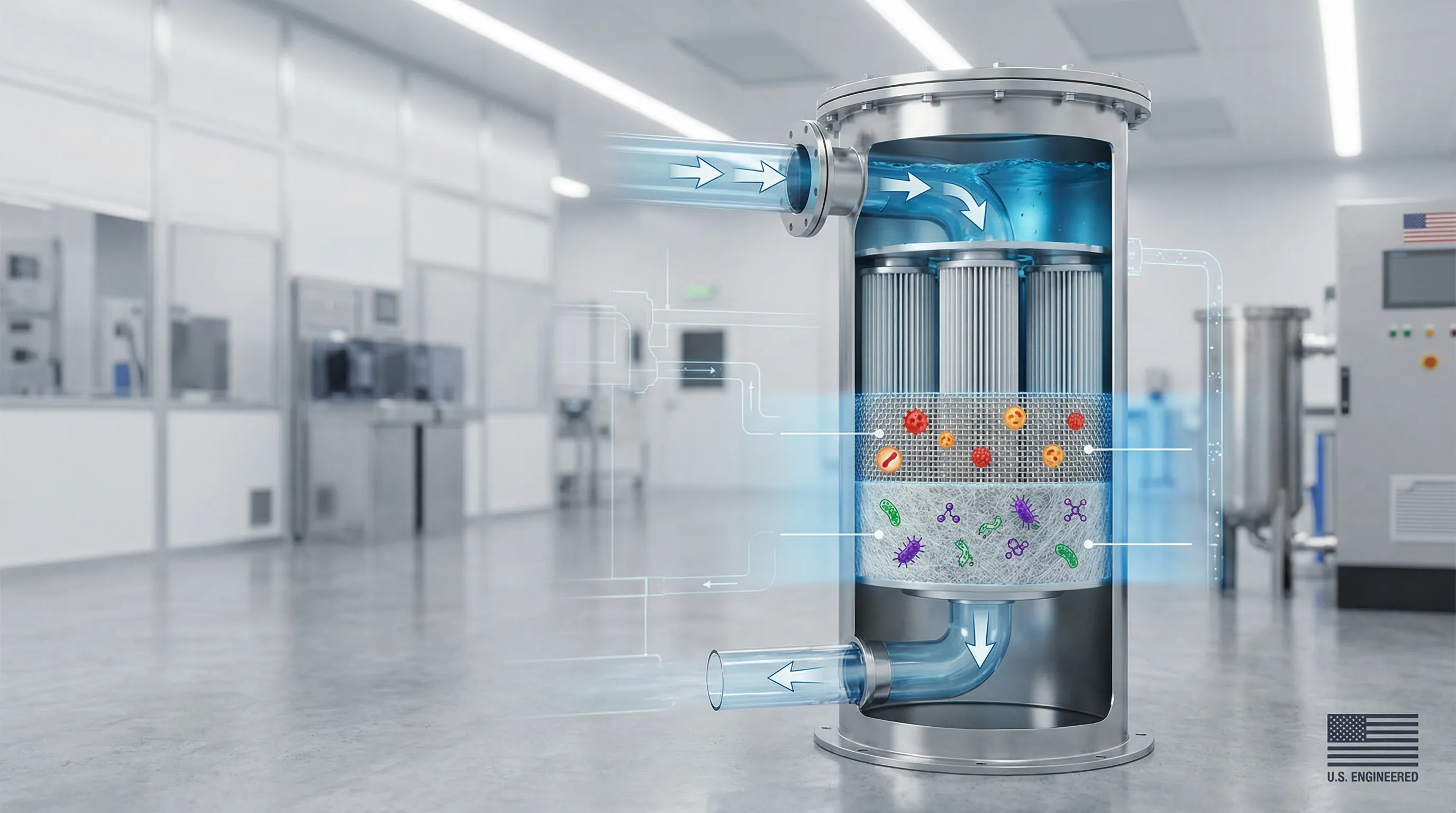
Cartridge filters operate on a simple, yet effective mechanical principle: contaminant-laden fluid flows through the filter cartridge, while trapped particles are retained by the filter media, allowing clean fluid to exit.
Operational Process
- Inlet: Fluid enters the filter housing under pressure.
- Through the Media: Fluid passes through the media layer. The filter media can be a surface filter (capturing particles on the surface) or depth filter (trapping contaminants throughout the media thickness).
- Particle Retention: Particles larger than the specified micron rating are trapped: some filters also retain bacteria through tight pore structures.
- Outlet: Clean fluid exits, ready for downstream use or further processing.
In pharmaceutical and semiconductor facilities, filters may be required to intercept microorganisms and nanometer-sized particles. High-quality membrane pleated cartridges, such as those produced by Pullner Filter, maintain strict pore size distributions for critical fluid streams.
Types of Cartridge Filters Used in Industry
Industrial processes demand specific cartridge filter technologies to address different contaminants and operational constraints. Key types include:
- Pleated Membrane Filters: Use synthetic membranes (such as PES, PTFE, or PVDF) arranged in pleats to maximize surface area and extend service life. These are standard in pharmaceutical, electronics, and biotech production for fine particle and bacteria removal.
- Melt-Blown Cartridge Filters: Constructed from thermally bonded polypropylene fibers for bulk particulate removal and pre-filtration, offering robust depth filtration.
- High Flow Filters: Designed with larger diameters and optimized pleat patterns, these filters accommodate high-flow requirements in power plants, chemical production, and water treatment facilities.
- Wound Cartridge Filters: Feature yarn wound around a core, suitable for suspensions containing gels or higher particulate loads.
- Activated Carbon Filters: Employed for dechlorination, odor reduction, and color removal, especially in food processing and beverage bottling.
Pullner Filter’s portfolio includes all these forms, with a focus on membrane pleated and high flow filter cartridges manufactured in cleanroom conditions to guarantee tight tolerances and performance consistency.
Key Advantages of Cartridge Filters in Industrial Systems
Cartridge filters deliver several critical benefits in industrial settings:
- High Efficiency: Consistent particle retention capabilities down to sub-micron and microbial levels, particularly with pleated membrane filters tested for integrity.
- Scalability: Modular design enables simple capacity adjustments, supporting small batch pilot lines or large, continuous processes.
- Ease of Replacement: Quick-change designs reduce downtime during maintenance, contributing to higher system uptime and throughput.
- Process Safety: Prevents cross-contamination and equipment fouling, critical for regulated industries.
- Adaptability: Variety of materials and formats match a wide spectrum of chemical, temperature, and pressure conditions.
At Pullner Filter’s advanced facility, automated cartridge production ensures dimensional consistency and proper sealing, reinforcing these performance advantages. Cartridges produced under ISO cleanroom standards achieve reliable filtration results for industries that depend on process integrity.
Typical Industrial Applications for Cartridge Filters
Cartridge filters are core components in sectors where product quality and equipment protection are priorities. Some of the most common industrial applications include:
- Pharmaceutical Manufacturing: Filtration and sterilization of process water, solvents, and solutions. Validation of bacterial retention and particulate removal is essential.
- Microelectronics and Semiconductor Production: Ultrapure water and chemical filtration, particle control down to nanometer size to reduce defects in chips and wafers.
- Food & Beverage Industry: Clarification and microbial reduction in bottled drinks, dairy production, and ingredient processing. Activated carbon cartridges are often used for taste and odor improvement.
- Automotive Manufacturing: Filtration of paints, coatings, and lubricants for precision engine assembly and finish quality.
- Power Generation and Chemical Processing: High flow filters for cooling water, process liquids, and chemicals.
Pullner Filter supplies products tailored for each application, including endurance-tested cartridges for rigorous continuous operations.
Selection Criteria for Choosing the Right Cartridge Filter
Selecting an appropriate cartridge filter depends on several technical and application-specific factors:
- Required Micron Rating: Defines the smallest particle size to be retained: pharmaceutical-grade filters often require 0.2 micron or finer membranes to ensure sterility.
- Compatibility: Chemical and thermal compatibility between filter media and process fluids is crucial, especially when handling aggressive solvents or high-temperature streams.
- Flow Rate and Pressure: The filter size, configuration, and surface area must accommodate system flow requirements without causing excessive pressure drop.
- Regulatory Compliance: Filtration materials and validation documents should meet relevant standards (e.g., FDA, USP, ISO) for use in regulated industries.
- Replacement Cycle: Cartridge lifespan varies with contaminant load and process conditions: high dirt-holding capacity leads to lower replacement frequency.
Pullner Filter’s engineering team provides technical support, helping clients match their process needs with the appropriate membrane, pleat design, and end cap configuration.
Maintenance and Best Practices for Cartridge Filter Performance
Consistent performance and process safety rely on proper installation and regular maintenance of cartridge filters:
- Scheduled Replacement: Cartridges should be replaced when pressure drop exceeds specified limits or after a defined period based on system load.
- Integrity Testing: Especially in sterile applications, use integrity (bubble point) and microbial retention testing to confirm ongoing filter effectiveness.
- System Flushing: Perform initial flushing of new cartridges to remove any loose fibers or manufacturing residues before commissioning.
- Record Keeping: Maintain logs of filter changes, pressure readings, and process conditions to track filter performance and enable predictive maintenance.
- Use Authentic Parts: Always source replacement cartridges from authorized OEMs such as Pullner Filter to ensure material compatibility and product traceability.
In Pullner Filter’s service model, technical engineers support equipment maintenance schedules to minimize downtime and support product warranty compliance.
About Pullner
Business: Pullner
Spokesperson: Lucy
Position: Sales Manager
Phone: 0086-21-57718597
Email: [email protected]
Location: LB19-Office No.1207, Jebel Ali Free Zone, Dubai, United Arab Emirates
Website: https://www.pullnerfilter.com/
Google Maps Link: https://maps.app.goo.gl/XgLZWHjGFcmdWddt6
Frequently Asked Questions About Cartridge Filters in Industrial Systems
What is a cartridge filter in industrial systems?
A cartridge filter is a replaceable element housed within a filtration system, designed to remove particulates, contaminants, and microorganisms from fluids or gases for industrial processes.
How does a cartridge filter work?
A cartridge filter works by allowing contaminated fluid to pass through its filter media, trapping particles and letting only clean fluid exit the system. The filter’s design ensures efficient retention of unwanted materials.
What are the main types of cartridge filters used in industry?
Common types include pleated membrane filters for fine particle and bacteria removal, melt-blown filters for bulk particle pre-filtration, high flow filters for large volumes, wound filters for suspensions, and activated carbon filters for dechlorination and odor removal.
When should cartridge filters be replaced in industrial applications?
Cartridge filters should be replaced when the pressure drop across the filter exceeds specified limits or after a recommended operational period, depending on contaminant load and system requirements.
What factors are important when selecting a cartridge filter for industrial use?
Key factors include required micron rating, compatibility with process fluids, desired flow rate, regulatory standards, and the expected replacement cycle based on the system’s contaminant load.
Can cartridge filters remove microorganisms from fluids?
Yes, high-quality cartridge filters with tight pore structures, such as membrane pleated filters, are capable of retaining bacteria and some microorganisms, making them suitable for sterile and regulated applications.